ChronoSpeak
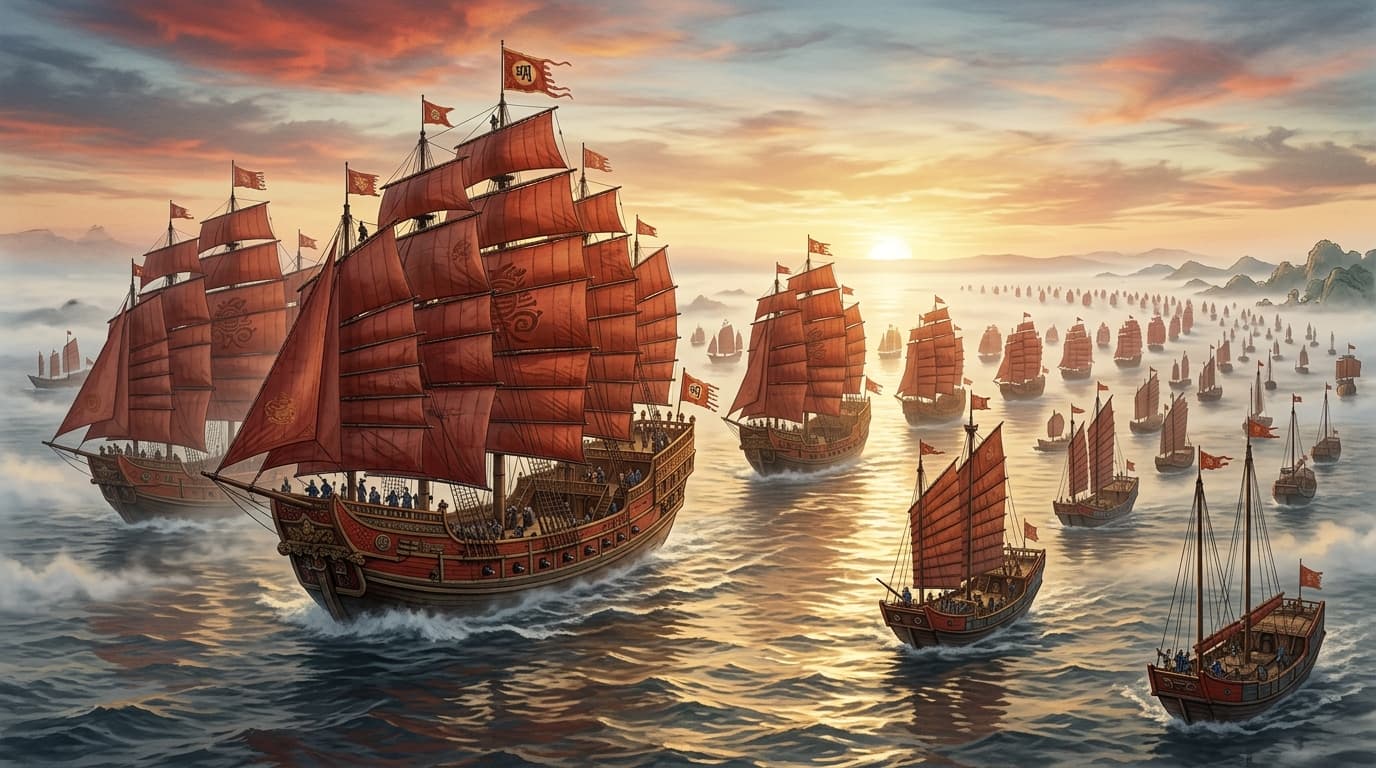
The Ming treasure fleet under full sail on open water at dawn, nine-masted flagships leading the formation.
Ming Dynasty1368–1644 CEAdvancedPro中文PinyinHSK 3.0

The Treasure Fleet Sails

宝船启航Bǎo Chuán Qǐ Háng

Talk your way onto the largest fleet ever launched — before the tide turns.

The scene

Nine masts, four hundred feet of hull, and a tide that will not wait. The Admiral needs someone aboard who can be understood in six ports, and he is deciding right now whether that person is you.

What you will be able to do

  • Give and understand precise directions, distances and times
  • Discuss cargo, weather and preparation
  • Speak formally and stay precise under pressure

Who you will be talking to

1 character
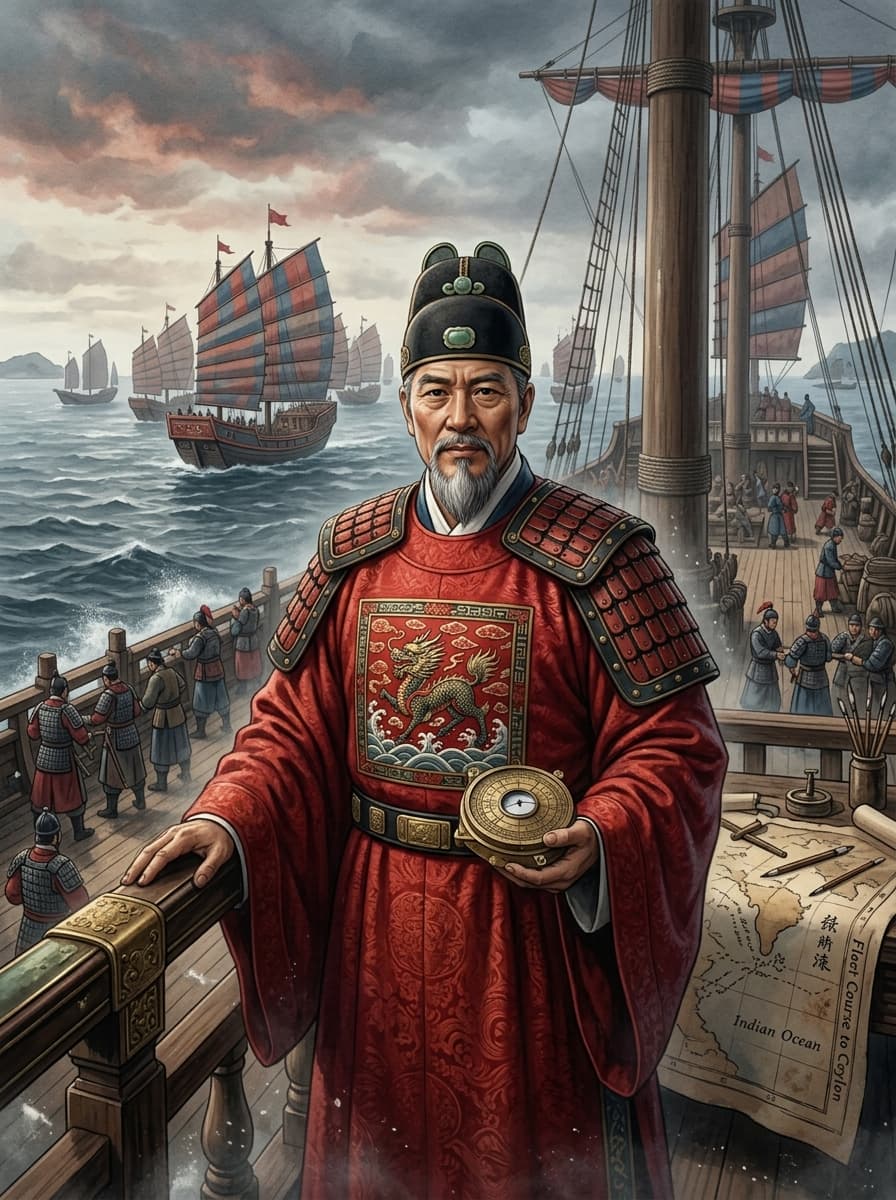
Portrait of Admiral Zheng He in Ming official's robes on the deck of a treasure ship, the fleet's sails behind him.

郑和

Zhèng Hé

Admiral of the Treasure Fleet · in his fifties

Born Ma He in Yunnan, taken into imperial service as a boy, and now commander of the largest fleet ever assembled. He has sailed to Java, Ceylon, Hormuz and the coast of Africa, and he negotiates as carefully as he navigates.

composedobservantdiplomaticimmovable once decided

船明天天亮就开。你想清楚了——上了船,再想下来就难了。

Chuán míngtiān tiānliàng jiù kāi. Nǐ xiǎng qīngchu le — shàng le chuán, zài xiǎng xiàlái jiù nán le.

The ship sails at dawn tomorrow. Be sure — once you're aboard, getting off again is another matter.

Words you will use

8 · Pinyin and HSK 3.0
  • 船chuán
    ship; boatnounHSK 2
  • 海hǎi
    seanounHSK 2
  • 帆fān
    sailnounHSK 4
  • 风fēng
    windnounHSK 2
  • 出发chū fā
    to set off; to departverbHSK 3
  • 货物huò wù
    cargo; goodsnounHSK 4
  • 方向fāng xiàng
    directionnounHSK 4
  • 远yuǎn
    faradjectiveHSK 2

What is going on here

3 culture notes
HistorySurprising

A fleet larger than any before it

The first voyage of 1405 carried 317 ships and around 27,800 men. The largest treasure ships were reportedly over 400 feet long — an order of magnitude beyond anything in Europe at the time.

HistorySurprising

Seven voyages, then nothing

Between 1405 and 1433 the fleet sailed seven times, reaching Hormuz, Mecca and Malindi. After Zheng He's death the voyages stopped, the records were suppressed, and the great ships rotted at their moorings.

Trade

Tribute, not colonies

The fleet did not annex territory. It traded, installed cooperative rulers, and carried envoys back to Nanjing. The giraffe brought from Malindi in 1414 was presented as a qilin — an auspicious beast from the classics.

The scripted path

1 authored dialogue

Before the Tide Turns

Answer the Admiral's questions about distance, direction, wind and cargo precisely enough to earn a berth aboard — before the tide turns.

12 turns · ~22 min

  1. Them

    天亮就出发。潮水不等任何人。你说你想上船——先告诉我,第一站是哪里?

    Tiān liàng jiù chūfā. Cháoshuǐ bù děng rènhé rén. Nǐ shuō nǐ xiǎng shàng chuán — xiān gàosu wǒ, dì yī zhàn shì nǎlǐ?

    We set out at first light. The tide waits for no one. You say you want to come aboard — first tell me: where is the first port of call?

  2. You

    禀大人,第一站是占城,从南京往西南走。

    Bǐng dàren, dì yī zhàn shì Zhānchéng, cóng Nánjīng wǎng xīnán zǒu.

    Reporting, Admiral — the first port is Champa, sailing southwest out of Nanjing.

  3. Them

    占城。多远?说清楚,我要的是天数。

    Zhānchéng. Duō yuǎn? Shuō qīngchu, wǒ yào de shì tiān shù.

    Champa. How far? Be clear about it — what I want is a number of days.

  4. You

    从南京到占城,大概二十天。顺风的话。

    Cóng Nánjīng dào Zhānchéng, dàgài èrshí tiān. Shùnfēng de huà.

    From Nanjing to Champa, about twenty days. If the wind is fair.

  5. 8 more turns, with grammar notes attached to the line where each one matters.