ChronoSpeak
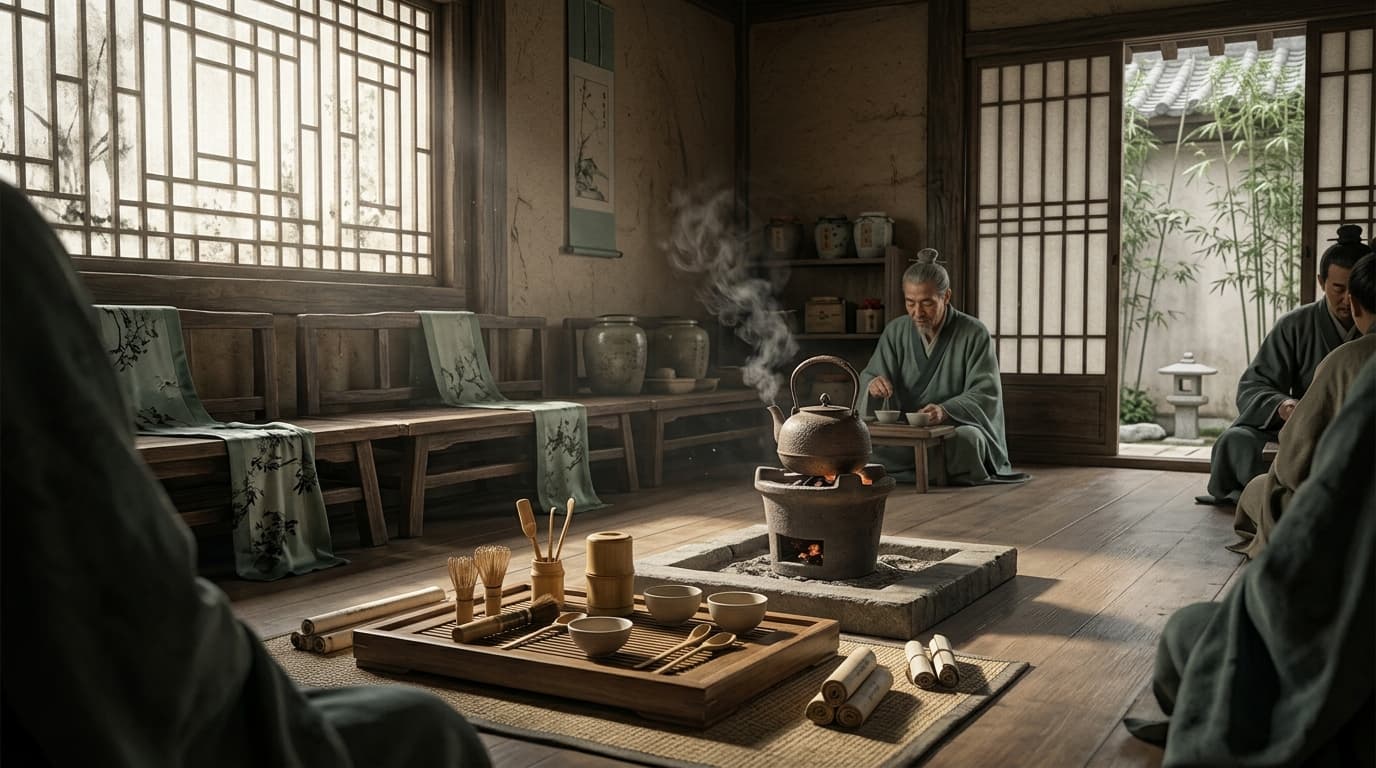
A low, quiet Tang tea house interior, steam rising from an iron kettle on a charcoal brazier beside a lattice window.
Tang Dynasty618–907 CEBeginnerPro中文PinyinHSK 3.0

The Tea House on Zhuque Street

茶馆Chá Guǎn

Sit with the Sage of Tea while he decides whether your water is good enough.

The scene

A low room off the city's widest avenue, where a man in a plain grey robe is boiling water for the fourth time and is not satisfied yet. He is writing a book about tea and he would rather talk about water.

What you will be able to do

  • Describe taste, temperature and texture in simple Chinese
  • Use 请 and 慢慢来 to keep a conversation polite and unhurried
  • Ask what something is called, and understand the answer

Who you will be talking to

1 character
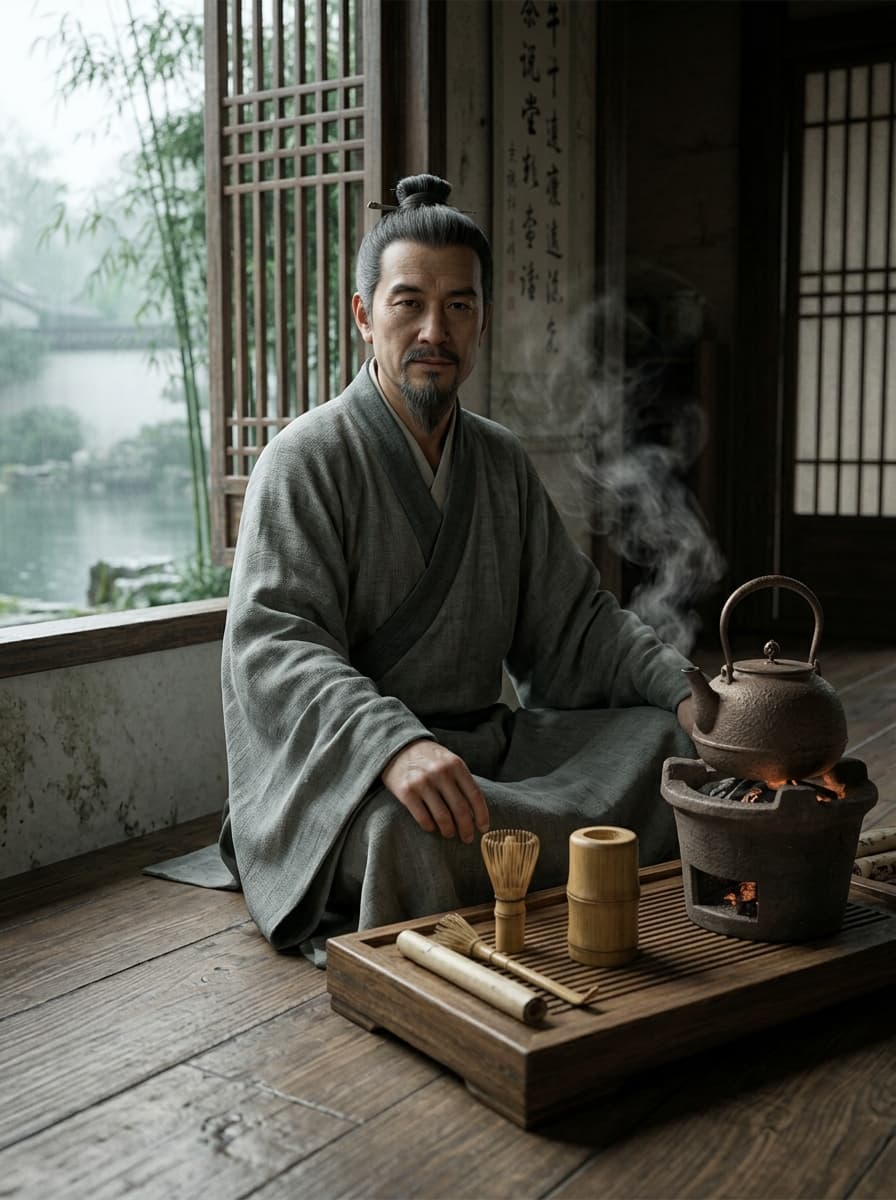
Portrait of Lu Yu, a Tang dynasty tea master in a plain grey scholar's robe, seated beside a steaming tea kettle.

陆羽

Lù Yǔ

Tea master, author of the Classic of Tea · in his forties

Raised in a Buddhist monastery, he refused the monastic life and walked away to study tea instead — how it is picked, fired, ground and brewed, and which water suits which leaf. He is writing it all down, and he is not yet finished.

precisecontemplativegently pedanticgenuinely humble

请坐。水刚沸,正好。你从何处来?

Qǐng zuò. Shuǐ gāng fèi, zhèng hǎo. Nǐ cóng hé chù lái?

Please sit. The water has just boiled — perfect timing. Where have you come from?

Words you will use

8 · Pinyin and HSK 3.0
  • 茶chá
    teanounHSK 1
  • 水shuǐ
    waternounHSK 1
  • 热rè
    hotadjectiveHSK 2
  • 苦kǔ
    bitteradjectiveHSK 3
  • 香xiāng
    fragrant; aromaticadjectiveHSK 3
  • 请qǐng
    please; to inviteverbHSK 1

    One character that does an enormous amount of social work: please sit, please eat, please go ahead.

  • 慢慢来。màn màn lái.
    Take your time.phraseHSK 2
  • 味道wèi dào
    taste; flavournounHSK 3

    Literally: flavour + way

What is going on here

3 culture notes
History

A book that made a drink into a discipline

The 茶经 Classic of Tea, finished around 760, is ten chapters on origins, tools, brewing and water. Lu Yu's central claim was unfashionable at the time: tea should be drunk for its own sake, not with scallions, ginger and orange peel boiled in.

CustomSurprising

Water, ranked

Lu Yu ranked water sources. Spring water from the mountains came first, river water second, well water last. Getting this right mattered more than the leaf — a claim that still starts arguments among tea people today.

Custom

Tea you whisk, not steep

Tang and Song tea was powdered and whisked with hot water into a froth — nothing like the steeped leaf in a modern cup. Loose-leaf brewing only became standard in the Ming.

The scripted path

1 authored dialogue

Water, Fire, Patience

Sit with Lu Yu while he boils his fourth kettle of the day and refuses to be satisfied with it — and learn to say what you taste, how hot it is, and that you are in no hurry.

11 turns · ~15 min

  1. Them

    请坐。水刚沸。这是第四次了。

    Qǐng zuò. Shuǐ gāng fèi. Zhè shì dì sì cì le.

    Please sit. The water has only just boiled. This is the fourth time.

  2. You

    这叫什么?

    Zhè jiào shénme?

    What is this called?

  3. Them

    这叫茶。很香。你闻一闻。

    Zhè jiào chá. Hěn xiāng. Nǐ wén yi wén.

    This is tea. Fragrant. Smell it.

  4. You

    茶很香。

    Chá hěn xiāng.

    The tea smells wonderful.

  5. 7 more turns, with grammar notes attached to the line where each one matters.