ChronoSpeak
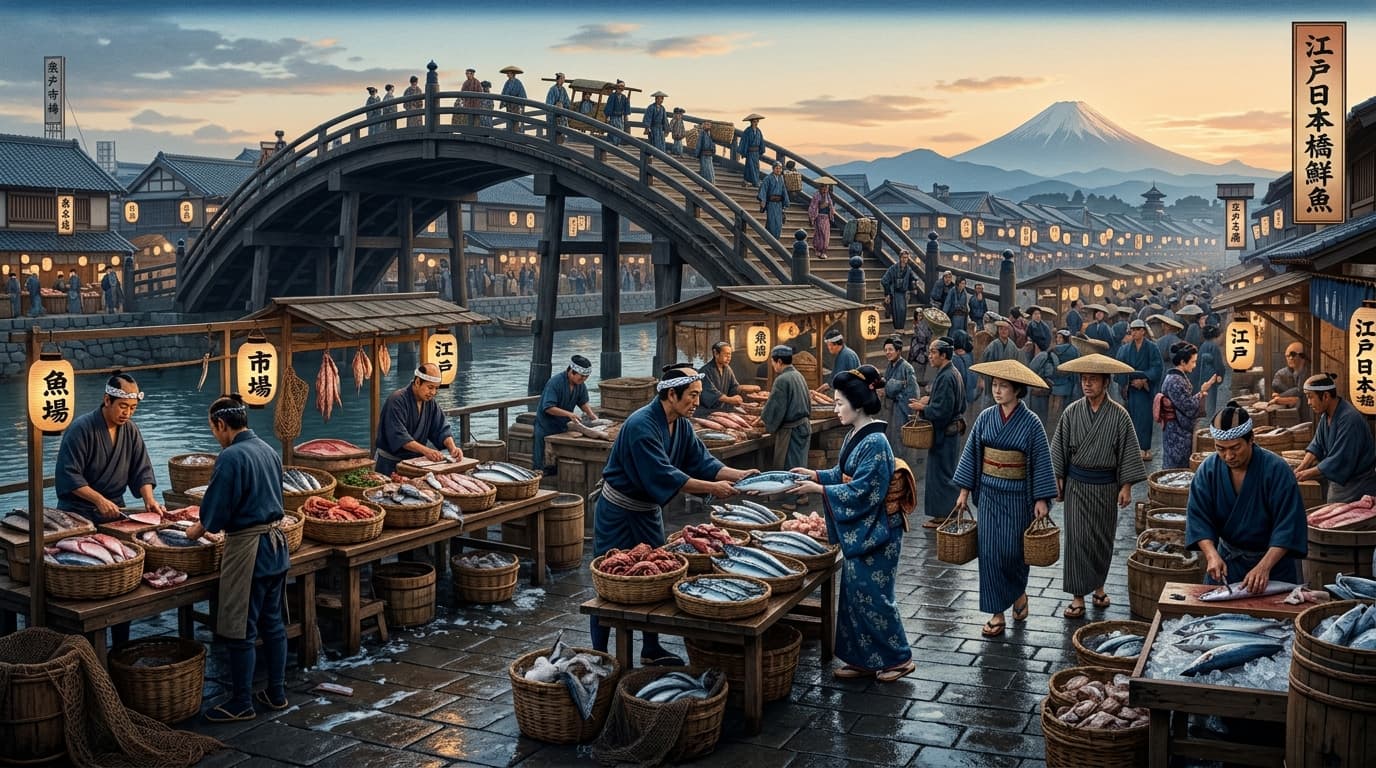
The Nihonbashi fish market at dawn, wooden stalls, baskets of fish and the bridge rising behind the crowd.
Edo Period1603–1868 CEBeginnerFree日本語RomajiJLPT

Nihonbashi Market

日本橋の魚市場Nihonbashi no uoichiba

Buy a fish you can name, from a fishmonger who will not let you overpay.

The scene

The bridge at Nihonbashi is the centre of the city and the zero point of every road out of Edo. Below it, the morning fish market is loud, wet and full of numbers. Osen has a stall, a sharp eye for a hesitant customer, and no intention of letting you pay the first price.

What you will be able to do

  • Greet a shopkeeper and ask what something is
  • Ask a price and understand a spoken number
  • Say that something is expensive and ask for a discount
  • Complete a purchase politely

Who you will be talking to

1 character
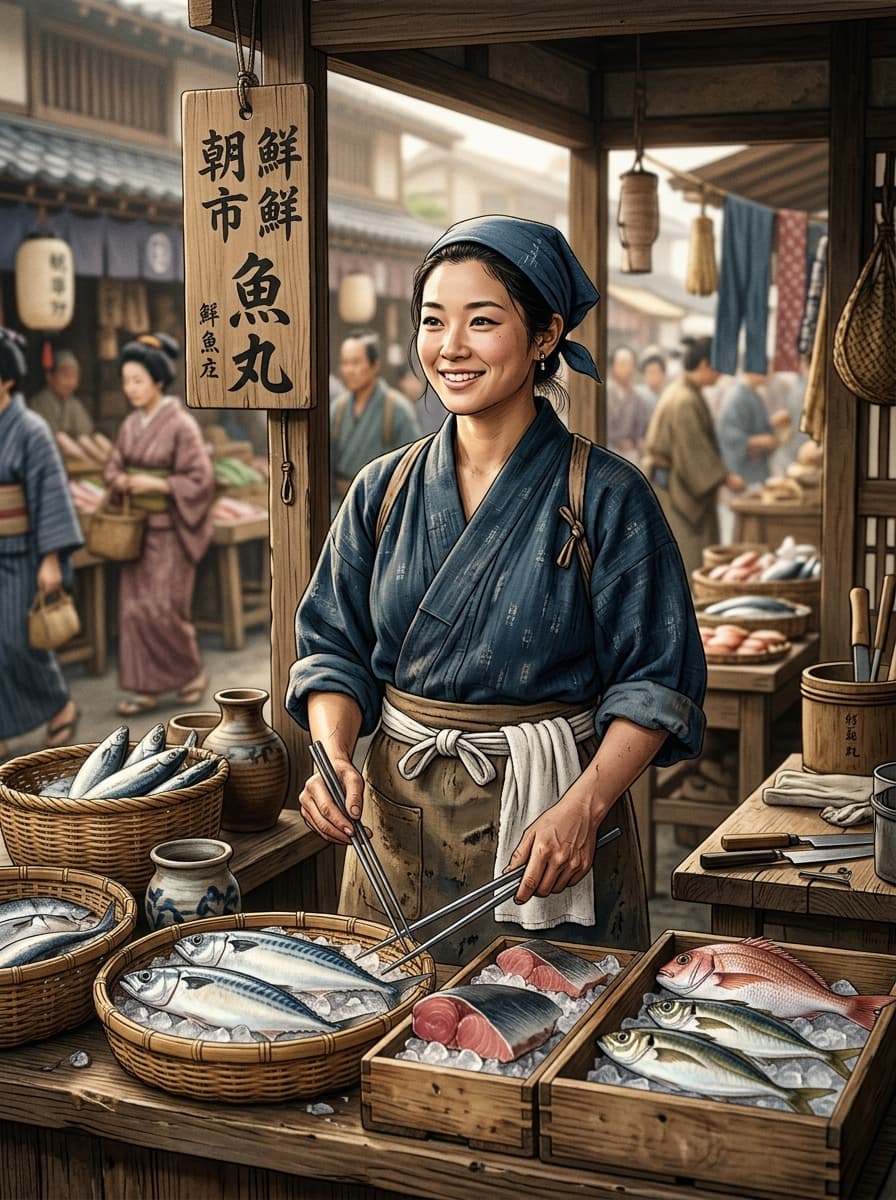
Portrait of Osen, an Edo-period fishmonger in an indigo work kimono, standing behind a stall of fish and baskets.

おせん

Osen

Fishmonger of Nihonbashi · late twenties

Osen has sold fish at Nihonbashi since she was old enough to carry a basket. She knows which boat came in late, which fish is worth the price and which customer is about to walk away. She teases beginners about their pronunciation, but she never lets one leave without the name of what they bought.

quick-wittedwarmshrewdplayfully impatient

おはよう!今日の魚はいいよ。何を探してる?

Ohayou! Kyou no sakana wa ii yo. Nani o sagashiteru?

Morning! Today's fish is good. What are you looking for?

Words you will use

9 · Romaji and JLPT
  • おはよう
    ohayou
    good morninggreetingN5–N4

    The everyday morning greeting between people who know each other.

  • これは何ですか
    kore wa nan desu ka
    What is this?phraseN5–N4

    Literally: this + topic + what + is + question

    Point at the thing and ask. これ is the thing near you; それ is near the listener.

  • いくらですか
    ikura desu ka
    How much is it?phraseN5–N4

    The single most useful sentence in any market.

  • 高い
    takai
    expensive; tall; highi-adjectiveN5–N4

    Said with a falling tone and a small laugh, it is an invitation to bargain, not an insult.

  • 安い
    yasui
    cheap; inexpensivei-adjectiveN5–N4
  • 買う
    kau
    to buyverbN5–N4

    買います is the polite form: これを買います — I'll take this one.

  • 一つ
    hitotsu
    one (thing)counterN5–N4

    The native counter for one object. Fish often take 一匹 ippiki instead, but 一つ is understood everywhere.

  • お願いします
    onegai shimasu
    please; I'd like thatphraseN5–N4

    A polite request that also serves as 'yes, please' when you are offered something.

  • まけてください
    makete kudasai
    please give me a discountphraseN2

    Literally: lower the price + please

    Polite but direct. A smile and 少しだけ — just a little — makes it playful rather than rude.

What is going on here

3 culture notes
History

The bridge at the centre of the world

Nihonbashi was both a bridge and an address. Distances to the provinces were measured from its centre, and the fish market beneath it supplied a city of more than a million people. The market moved to Tsukiji in 1935, but the bridge still carries the old name.

Trade

Mon, and the trouble with change

Edo's everyday coin was the mon, a small copper piece. Prices were quoted in mon and in ryō, a gold unit far too large for a fish. The shogunate minted repeatedly and recoined the currency, so a merchant like Osen watches the metal as closely as the customer.

Etiquette

Bargaining without losing face

Haggling is a performance of reluctance on both sides. The seller names a high price, the buyer calls it expensive, and both wait to see who moves first. Refusing too bluntly ends the exchange; まけてください turns it into a game.

The scripted path

1 authored dialogue

Your First Fish

Buy a sea bream from Osen at Nihonbashi without paying her first price — and learn the words that make it possible.

13 turns · ~12 min

  1. Them

    おはよう!今日の魚はいいよ。何を探してる?

    Ohayou! Kyou no sakana wa ii yo. Nani o sagashiteru?

    Morning! Today's fish is good. What are you looking for?

  2. You

    おはようございます。これは何ですか。

    Ohayou gozaimasu. Kore wa nan desu ka.

    Good morning. What is this?

  3. Them

    それは鯛だよ。今朝、湾から来たばかり。

    Sore wa tai da yo. Kesa, wan kara kita bakari.

    That's sea bream. It came in from the bay just this morning.

  4. You

    いくらですか。

    Ikura desu ka.

    How much is it?

  5. 9 more turns, with grammar notes attached to the line where each one matters.