ChronoSpeak
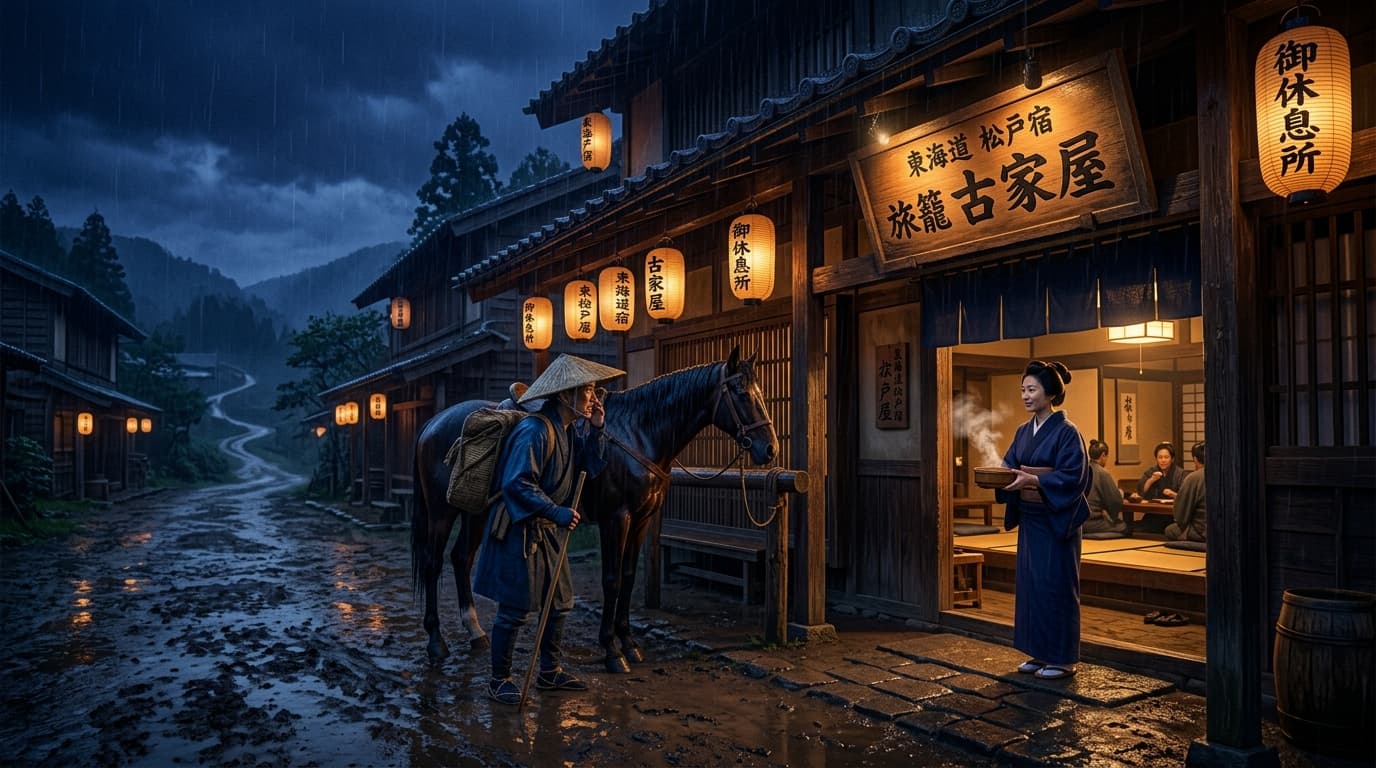
A post-station inn on the Tōkaidō at night, lanterns lit, a traveller's horse under the eaves and rain on the road.
Edo Period1603–1868 CEIntermediatePro日本語RomajiJLPT

The Tōkaidō Inn

東海道の宿Tōkaidō no yado

Ask for a room, a meal and a bath before the kitchen closes.

The scene

You arrive after dark, wet from the road, at one of the fifty-three post stations between Edo and Kyoto. O-Tsu runs the inn with two servants and a firm sense of what is and is not included. A room, a meal and a bath are three separate negotiations.

What you will be able to do

  • Ask for a room and say how many nights you will stay
  • Ask permission to do something
  • Order a meal and ask what is available
  • Make a plan for tomorrow using polite forms

Who you will be talking to

1 character
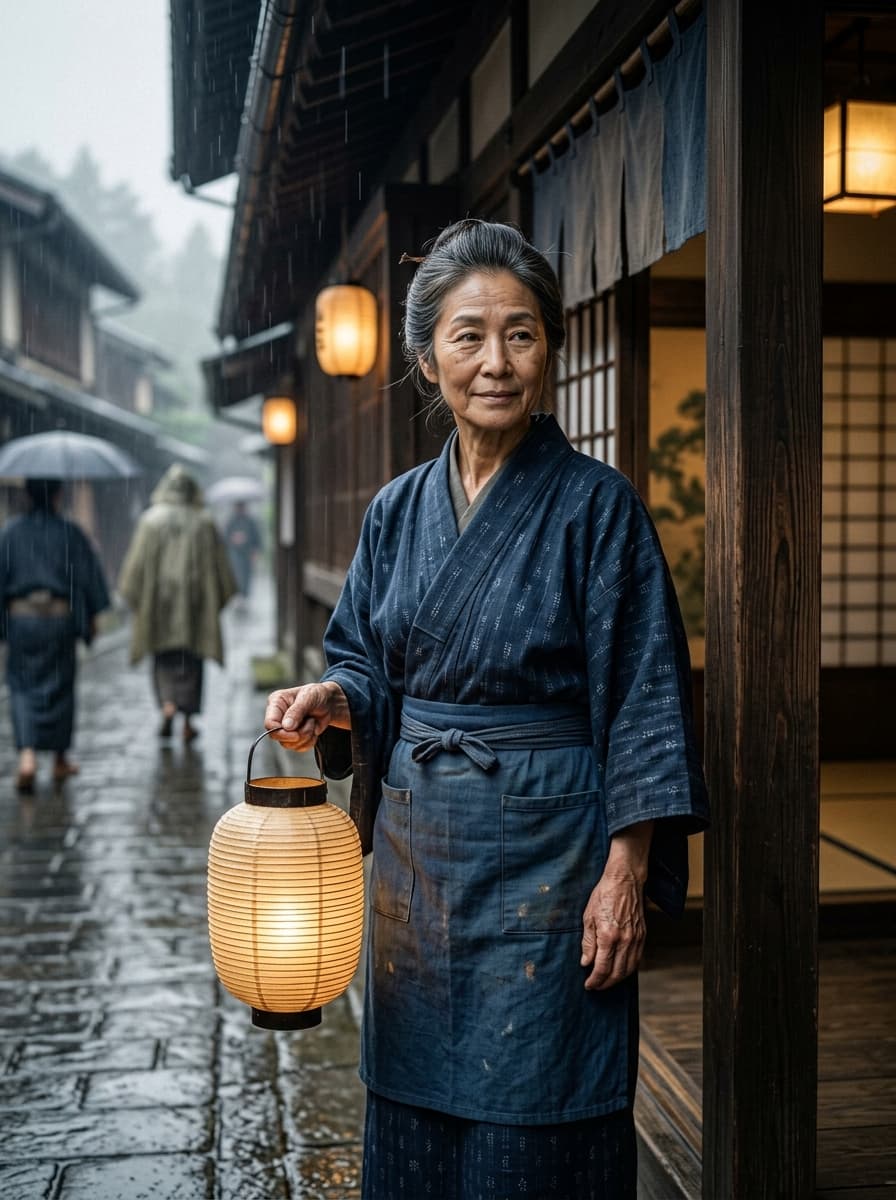
Portrait of O-Tsu, an Edo-period innkeeper in a practical cotton kimono, holding a lantern at the inn door.

おつう

O-Tsu

Innkeeper on the Tōkaidō · in her forties

O-Tsu has run a post-station inn since her husband died, with two servants, one bath and a kitchen that closes when the fire is out. She can tell a paying traveller from a runaway at a glance, and she has no patience for either romance or rudeness.

practicalkindshrewdfond of gossip

あら、濡れてるじゃない。上がって、火にあたりなさい。

Ara, nureteru ja nai. Agatte, hi ni atari nasai.

Oh, you're soaked. Come in and warm yourself by the fire.

Words you will use

9 · Romaji and JLPT
  • 宿
    yado
    inn; lodgingnounN3
  • 部屋
    heya
    roomnounN5–N4
  • 泊まる
    tomaru
    to stay overnightverbN3

    泊まります is the polite form. 一晩泊まりたいのですが — I'd like to stay one night.

  • 食事
    shokuji
    meal; foodnounN3
  • お風呂
    ofuro
    bathnounN3

    The bath is shared and comes with a strict order: wash first, then soak.

  • 明日
    ashita
    tomorrownounN5–N4
  • 〜てもいいですか
    ~te mo ii desu ka
    may I…?grammarN2

    Verb in て-form + もいいですか asks permission. 入ってもいいですか — may I come in?

  • 〜ませんか
    ~masen ka
    won't you…?; shall we…?grammarN3

    An invitation, softer than ましょう. 一緒に食べませんか — won't you eat with me?

  • 〜てください
    ~te kudasai
    please do…grammarN3

    A direct but polite request. 部屋をください is a little abrupt; 部屋をお願いします is warmer.

What is going on here

3 culture notes
History

Fifty-three stations

The Tōkaidō was the busiest of the five great roads. Its fifty-three post stations offered inns, teahouses, stables and officials; a traveller on foot needed roughly two weeks between Edo and Kyoto.

Daily life

Who got the good room

The best inn in a post town was the honjin, reserved for daimyō and high officials. Ordinary travellers stayed at waki-honjin or cheaper hatago. A woman running a hatago had to judge quickly whether a guest could pay.

Custom

The bath is not private

Edo-period inns usually had one shared bath, heated by a wood fire beneath an iron cauldron. Guests washed outside the tub and soaked in it in turn. A traveller who climbed straight in was told, firmly, to get out.

The scripted path

1 authored dialogue

A Bed for the Night

Arrive wet, ask for a room, a meal and a bath, and make an early start on the Tōkaidō — without breaking the inn's rules.

17 turns · ~18 min

  1. Them

    あら、濡れてるじゃない。上がって、火にあたりなさい。

    Ara, nureteru ja nai. Agatte, hi ni atari nasai.

    Oh, you're soaked. Come in and warm yourself by the fire.

  2. You

    すみません。一晩、泊まりたいのですが。

    Sumimasen. Hitoban, tomaritai no desu ga.

    Excuse me. I'd like to stay one night.

  3. Them

    一晩ね。部屋は一つしか空いてないよ。いいかい?

    Hitoban ne. Heya wa hitotsu shika aitenai yo. Ii kai?

    One night, then. Only one room is free. Is that all right?

  4. You

    はい、大丈夫です。お願いします。

    Hai, daijoubu desu. Onegai shimasu.

    Yes, that's fine. Please.

  5. 13 more turns, with grammar notes attached to the line where each one matters.