ChronoSpeak
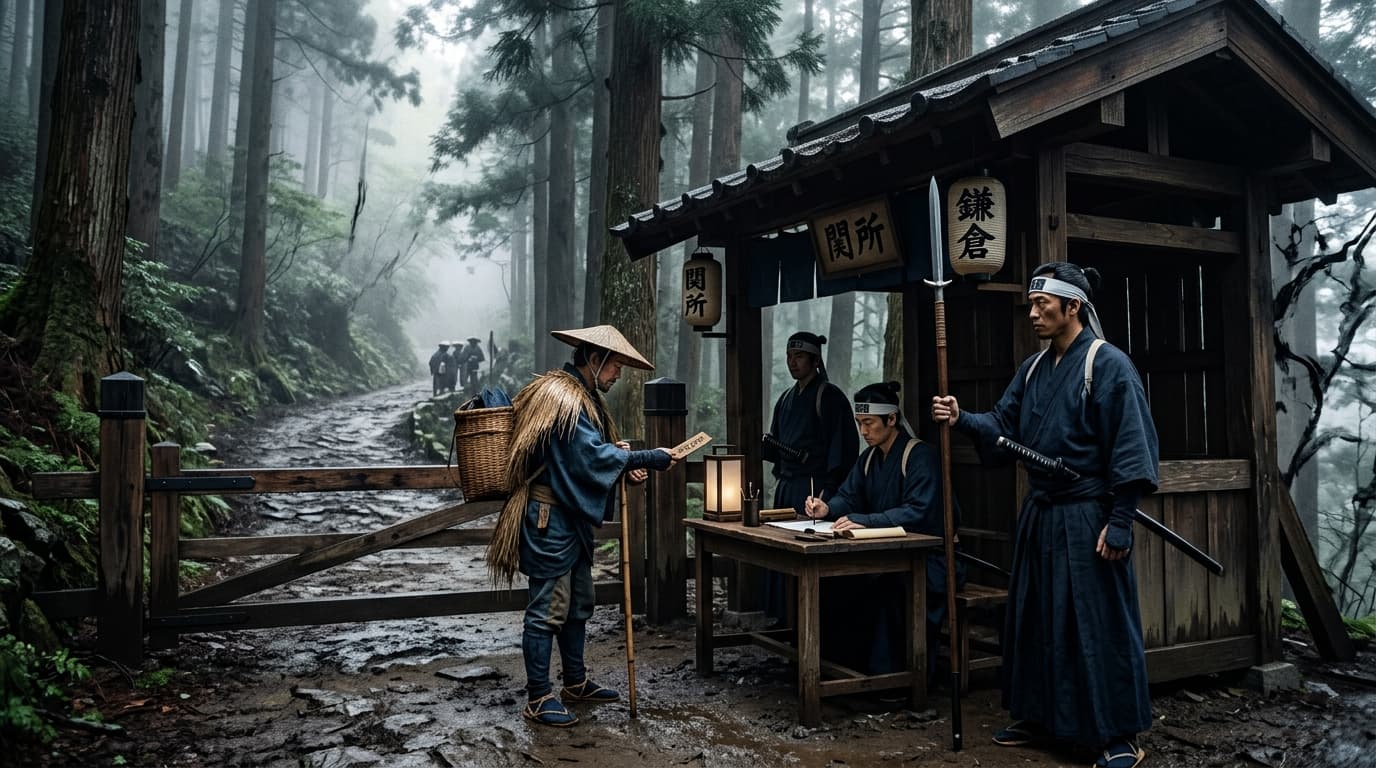
A wooden checkpoint on a mountain road into Kamakura, guards with spears, a traveller presenting a wooden permit.
Kamakura Period1185–1333 CEIntermediatePro日本語RomajiJLPT

The Checkpoint at Koshigoe

腰越の関Koshigoe no seki

Talk your way through a Kamakura checkpoint without losing your permit or your temper.

The scene

Every road into Kamakura passes a barrier, and every traveller needs a reason and a paper. The regent Hōjō Tokimune is inspecting the barrier himself; a report from Kyushu says the Mongols are gathering ships again. He has no patience for a vague answer.

What you will be able to do

  • State your name, origin and purpose
  • Ask permission with てもいいですか
  • Understand a prohibition with てはいけません
  • Express an obligation with なければなりません

Who you will be talking to

1 character
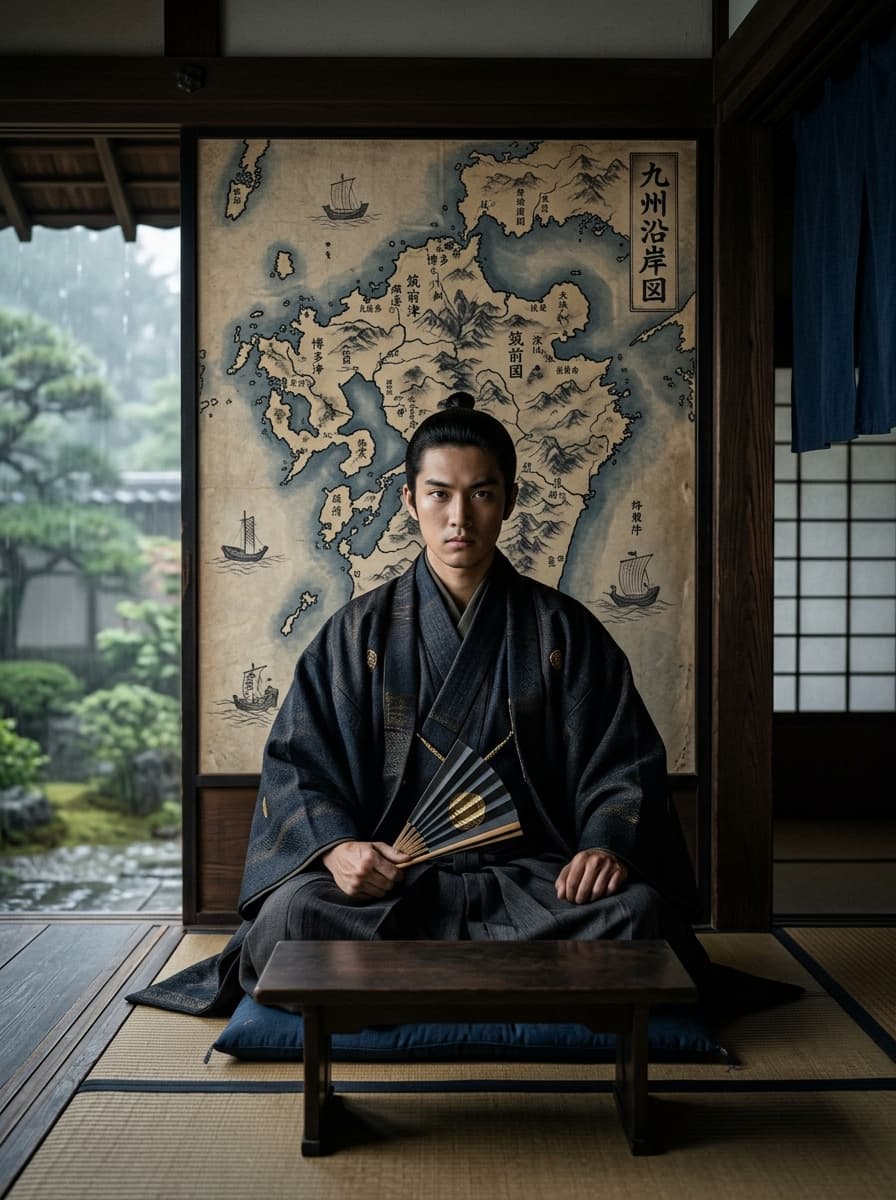
Portrait of Hōjō Tokimune in a dark formal robe, seated before a map of the Kyushu coast.

北条時宗

Hōjō Tokimune

Regent of the Kamakura shogunate · late twenties

Tokimune became regent at eighteen and spent his adulthood preparing for an invasion he could not prevent. He is direct because he has no time, formal because the office demands it, and unexpectedly curious about anyone who has been beyond the sea.

watchfuldecisiveformalquietly curious

名前と用向きを。

Namae to yōmuki o.

Your name and your business.

Words you will use

9 · Romaji and JLPT
  • 関所
    sekisho
    checkpoint; barriernounN2
  • 手形
    tegata
    travel permit; letter of authorizationnounN2

    A wooden or paper pass naming the bearer and the purpose of travel. Forging one was a serious offence.

  • 通る
    tooru
    to pass throughverbN3

    通ります is polite. 通ってもいいですか — may I pass?

  • 目的
    mokuteki
    purpose; aimnounN2
  • 名前
    namae
    namenounN5–N4
  • どこから
    doko kara
    from wherephraseN5–N4
  • 〜てもいいですか
    ~te mo ii desu ka
    may I…?grammarN2

    A request for permission. The answer may be いいですよ — yes, that's fine — or いけません — no.

  • 〜てはいけません
    ~te wa ikemasen
    you must not…grammarN2

    A firm prohibition from someone with authority. Softer than a command, harder than advice.

  • 〜なければなりません
    ~nakereba narimasen
    must; have togrammarN1

    Negative verb stem + なければなりません. 見せなければなりません — you must show it.

What is going on here

3 culture notes
History

A barrier on the road

Kamakura controlled access with barriers (関所) on the approaches to the city. Guards checked travellers for weapons, goods and permits, and the shogunate could close a barrier entirely when it feared an invasion or a rebellion.

HistorySurprising

The second invasion

After the 1274 raid, the shogunate expected another attack and fortified the coast of Kyushu. The second invasion came in 1281: two fleets, a prolonged siege, and a typhoon that scattered the ships. The Japanese called it kamikaze, a divine wind.

History

Who actually ruled

The shogun was often a figurehead; the Hōjō regent (執権 shikken) held real power. Tokimune took the office at eighteen and was regent during both Mongol invasions. A conversation with him is a conversation with the government.

The scripted path

1 authored dialogue

Papers at the Barrier

A permit with the wrong name, a regent with no patience, and a road that closes at dusk. Talk your way through the Koshigoe barrier.

17 turns · ~18 min

  1. Them

    止まれ。名前と用向きを。

    Tomare. Namae to youmuki o.

    Stop. Your name and your business.

  2. You

    私は旅の商人です。

    Watashi wa tabi no shōnin desu.

    I am a travelling merchant.

  3. Them

    どこから来た。

    Doko kara kita.

    Where did you come from?

  4. You

    京から来ました。

    Kyō kara kimashita.

    I came from Kyoto.

  5. 13 more turns, with grammar notes attached to the line where each one matters.