ChronoSpeak
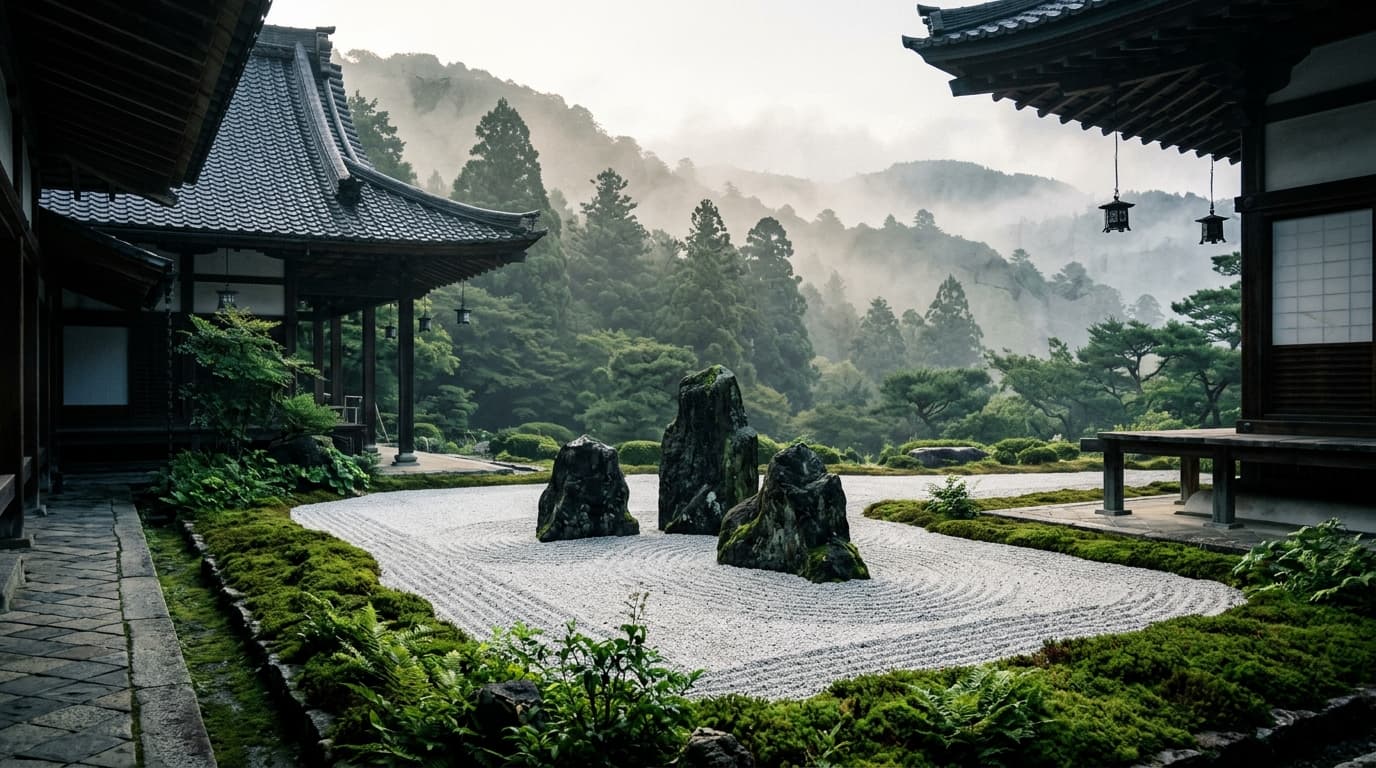
A dry Zen garden at Kenchō-ji in the morning, raked gravel around three dark stones, temple eaves and cedar hills behind.
Kamakura Period1185–1333 CEBeginnerPro日本語RomajiJLPT

The Temple Garden

建長寺の庭Kenchōji no niwa

Help a Zen master place a stone without ruining the emptiness around it.

The scene

Behind the main hall at Kenchō-ji, a dry garden holds a sea of raked gravel and a handful of stones. Musō Soseki is deciding where one more stone should go — or whether it should go anywhere at all. He asks the traveller to look before answering.

What you will be able to do

  • Greet someone politely in a temple
  • Ask what something is and describe it
  • Say where to put something
  • Make a polite request with ください

Who you will be talking to

1 character
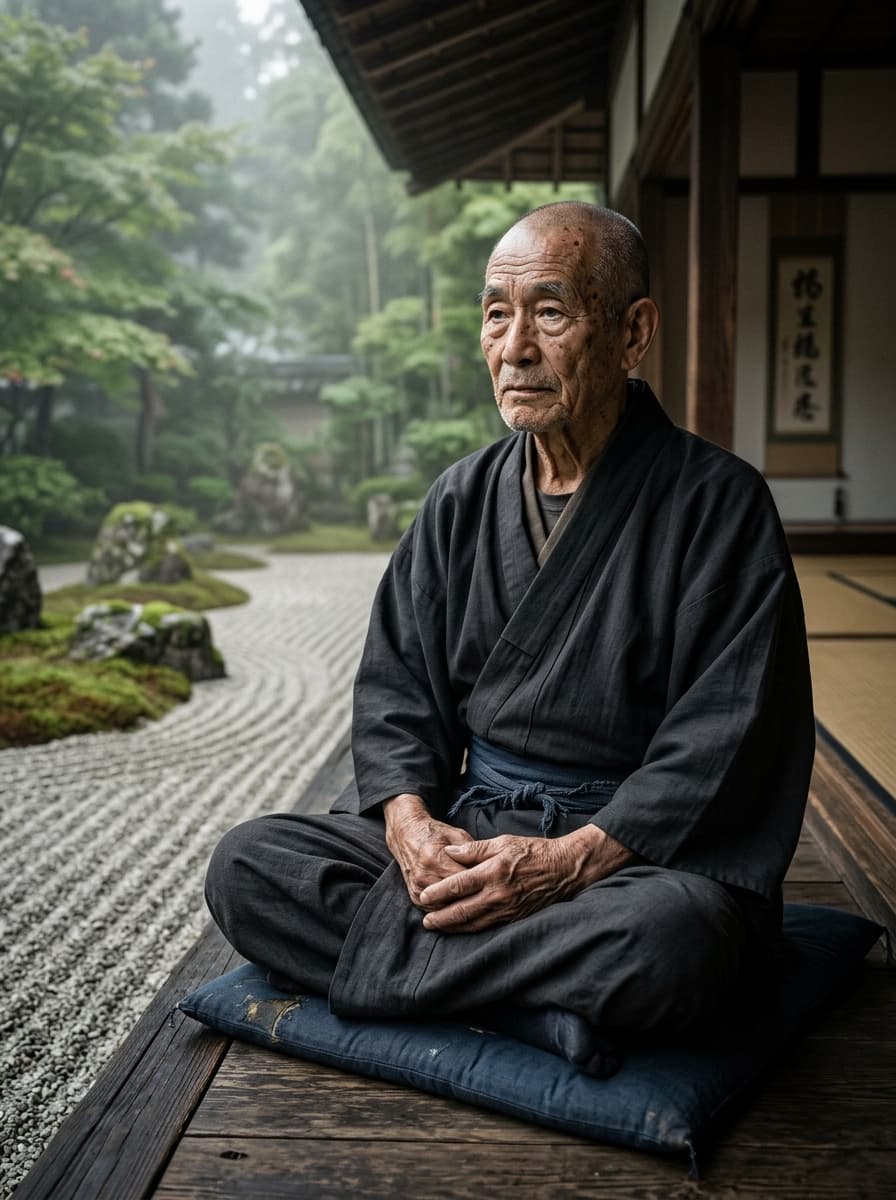
Portrait of Musō Soseki, an elderly Zen monk in a dark robe, seated beside a raked gravel garden.

夢窓疎石

Musō Soseki

Zen monk and garden master · in his sixties

A Zen abbot who has designed gardens for emperors and shoguns and refused most of the honours offered to him. He thinks with his hands: a stone is placed, then moved, then left alone for a season. He is patient with a learner and impatient with a careless answer.

calmprecisedryly humorousunhurried

おはようございます。庭は、まだ眠っています。

Ohayou gozaimasu. Niwa wa, mada nemutte imasu.

Good morning. The garden is still asleep.

Words you will use

9 · Romaji and JLPT
  • おはようございます
    ohayou gozaimasu
    good morning (polite)greetingN5–N4
  • 庭
    niwa
    gardennounN3
  • 石
    ishi
    stonenounN3
  • 静か
    shizuka
    quiet; stillna-adjectiveN3

    静かな庭 — a quiet garden. The な is the adjective's linking form, not part of the word.

  • きれい
    kirei
    beautiful; cleanna-adjectiveN5–N4

    A na-adjective that ends in い, so learners often mistake it for an i-adjective. きれいな庭, not きれい庭.

  • 好き
    suki
    liked; favouritena-adjectiveN5–N4

    X が好きです — I like X. The thing liked takes が, not を.

  • 置く
    oku
    to place; to putverbN3

    置きます is polite. ここに置いてください — please put it here.

  • ください
    kudasai
    please (give me / do for me)auxiliaryN5–N4

    Attached to the て-form for a request: 見てください — please look.

  • ありがとうございます
    arigatou gozaimasu
    thank you (polite)phraseN5–N4

What is going on here

3 culture notes
History

The first great Zen temple

Kenchō-ji was founded in 1253 as the first of Kamakura's great Zen monasteries. Its layout was imported from Song China: a symmetrical axis of gates and halls, with the garden as a place for walking meditation rather than display.

CustomSurprising

A garden made of absence

A karesansui — dry landscape garden — uses gravel, stones and moss instead of water. The raked lines suggest currents; the stones suggest islands or mountains. What is left out is as deliberate as what is placed.

Belief

The garden is not a picture

A Zen garden is meant to be entered, sat beside and walked past, not viewed once from a single point. Musō Soseki designed gardens as places where the mind could settle, and he wrote that a garden should change with the light and the season.

The scripted path

1 authored dialogue

The Stone That Was Not There

Musō Soseki has one stone left to place. Help him choose where it goes, and explain why the garden is quieter afterwards.

15 turns · ~15 min

  1. Them

    おはようございます。庭は、まだ眠っています。

    Ohayou gozaimasu. Niwa wa, mada nemutte imasu.

    Good morning. The garden is still asleep.

  2. You

    おはようございます。きれいな庭ですね。

    Ohayou gozaimasu. Kirei na niwa desu ne.

    Good morning. It is a beautiful garden.

  3. Them

    ありがとうございます。でも、まだ一つ、足りません。

    Arigatou gozaimasu. Demo, mada hitotsu, tarimasen.

    Thank you. But one thing is still missing.

  4. You

    どこに置きますか。

    Doko ni okimasu ka.

    Where shall I put it?

  5. 11 more turns, with grammar notes attached to the line where each one matters.