ChronoSpeak
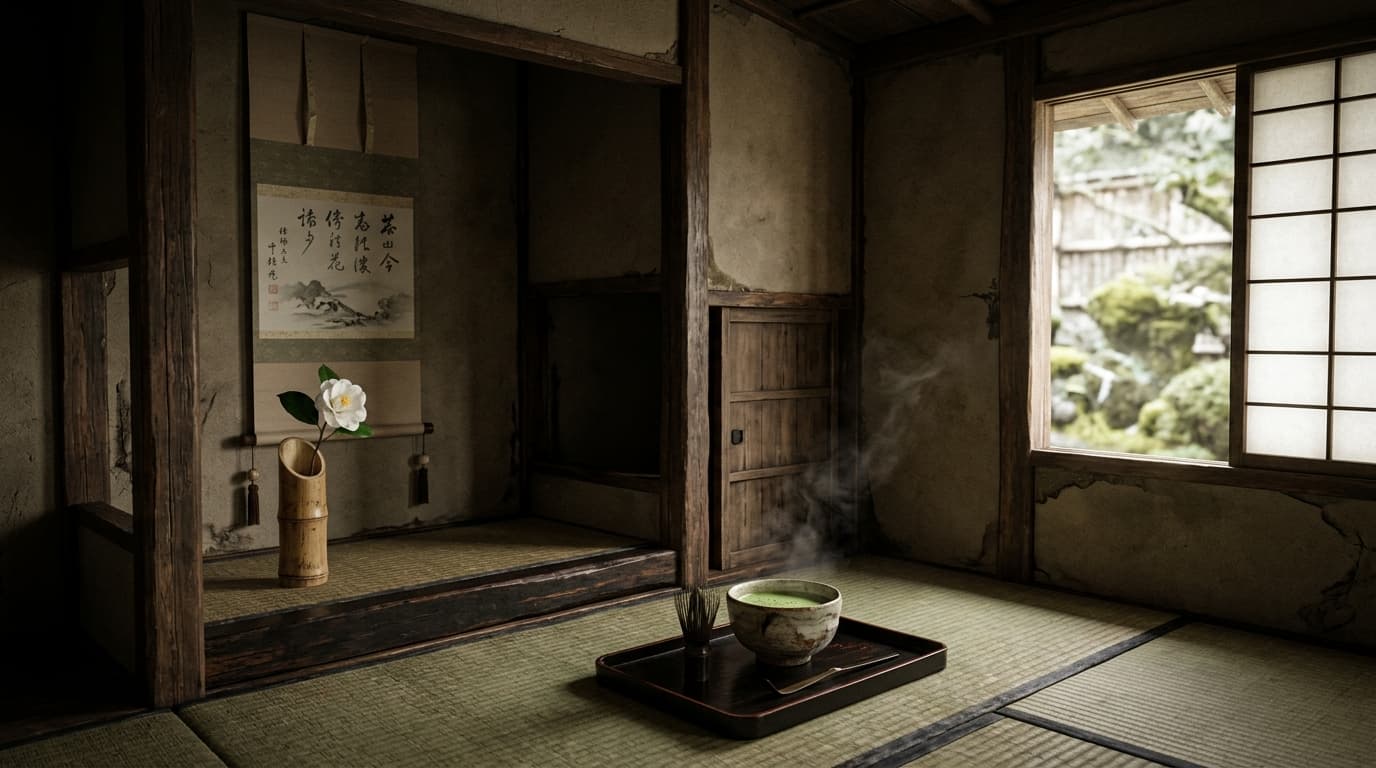
A small tea room with a low entrance, a hanging scroll and a single bowl of matcha on a lacquer tray.
Muromachi & Momoyama1336–1603 CEIntermediatePro日本語RomajiJLPT

The Tea Room in Kyoto

京の茶室Kyō no chashitsu

Enter a tea room, accept a bowl, and learn why one meeting is enough.

The scene

The tea room is small on purpose. A low door makes every guest bow; a single scroll and a single flower leave nothing to hide behind. Sen no Rikyū is preparing tea, and he is watching how you enter more closely than what you say.

What you will be able to do

  • Use the set phrases of entering and receiving
  • Ask about an object politely
  • Describe taste and beauty
  • Ask permission to look at something

Who you will be talking to

1 character
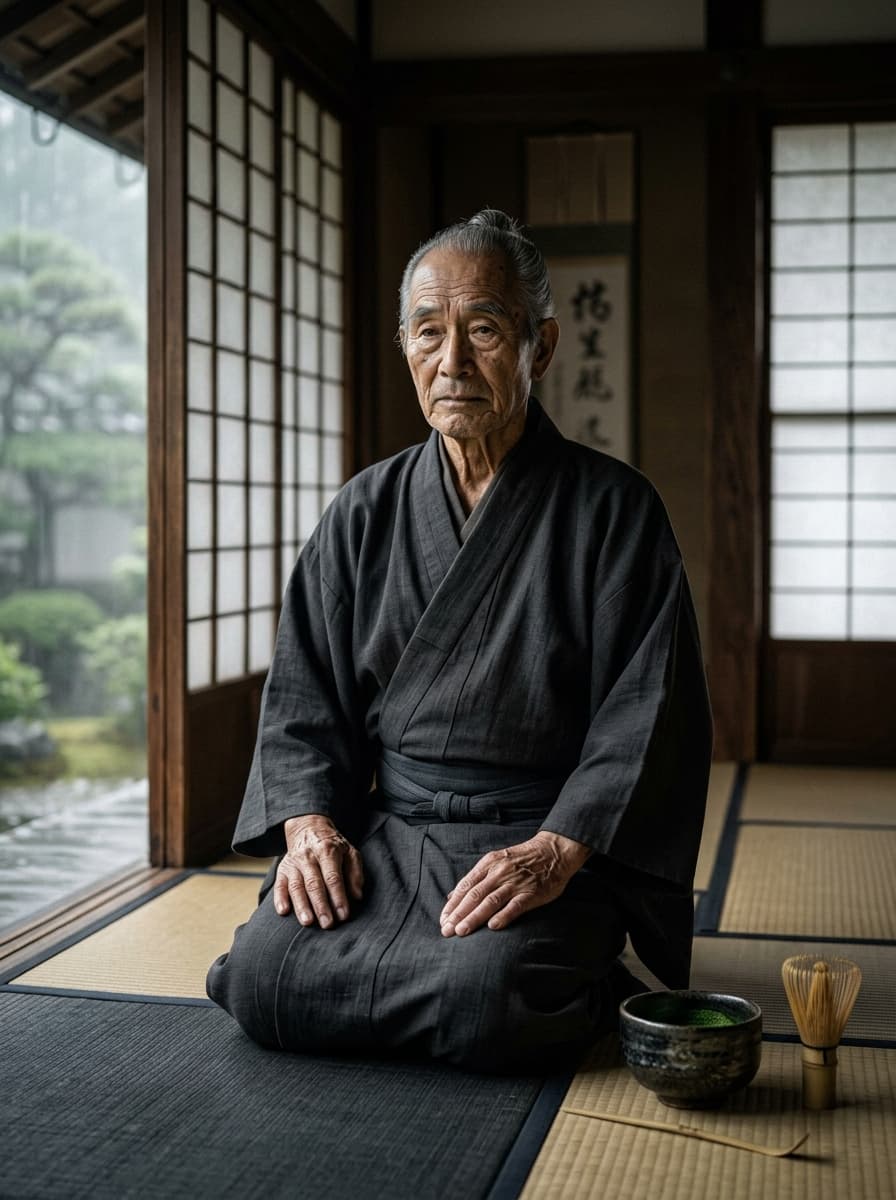
Portrait of Sen no Rikyū in a plain dark tea robe, kneeling beside a tea bowl and bamboo whisk.

千利休

Sen no Rikyū

Tea master · in his sixties

Rikyū turned tea from a display of taste into a discipline of restraint. He chooses a bowl for the hand, a flower for the season and a silence for the guest. He has served the most powerful man in Japan and refused to let tea become a performance of wealth.

exactquietwarm beneath formalityuncompromising

どうぞ、お入りください。今日は、この一碗だけです。

Douzo, oiri kudasai. Kyou wa, kono ichiwan dake desu.

Please, come in. Today, there is only this one bowl.

Words you will use

9 · Romaji and JLPT
  • 茶室
    chashitsu
    tea roomnounN2
  • お茶
    ocha
    teanounN5–N4

    The お prefix makes it polite and warm. In a tea room, お茶 usually means matcha.

  • いただきます
    itadakimasu
    I humbly receivephraseN5–N4

    Said before eating or drinking. Literally, it lowers the speaker before the thing received.

  • どうぞ
    douzo
    please; go aheadphraseN5–N4

    The host's invitation. どうぞ、お茶を — please, have some tea.

  • おいしい
    oishii
    deliciousi-adjectiveN5–N4
  • 器
    utsuwa
    vessel; bowl; vessel for a spiritnounN2

    A tea bowl is a 茶碗; 器 is the broader word for a vessel. In tea, the bowl is chosen as carefully as the tea.

  • 一期一会
    ichigo ichie
    one time, one meetingfour-character idiomN1

    Literally: one lifetime + one meeting

    Every meeting happens once and will never repeat exactly. In tea, it is why the host prepares as if for the only guest in the world.

  • 失礼します
    shitsurei shimasu
    excuse me; I am intrudingphraseN3

    Literally: I commit a discourtesy

    Said on entering a room, leaving a room, or interrupting. The literal meaning is a small self-lowering.

  • 見る
    miru
    to see; to look atverbN5–N4

    見てもいいですか — may I look at it? The polite way to ask to examine the bowl.

What is going on here

3 culture notes
Belief

Wabi and sabi

Wabi is the beauty of what is simple, unpolished and solitary; sabi is the beauty of what has aged. A tea bowl with a repaired crack can be more valuable than a flawless one, because the repair records a life.

CustomSurprising

A room the size of a cloth

Rikyū reduced the tea room to two mats or fewer. The low entrance, the unadorned walls and the single scroll strip away status; a lord and a merchant bow equally to get in.

HistorySurprising

The tea master who would not flatter

Sen no Rikyū served Toyotomi Hideyoshi but refused to turn tea into a display of wealth. His aesthetic of restraint shaped the ceremony; his refusal to compromise eventually cost him his life.

The scripted path

1 authored dialogue

One Bowl, One Meeting

Enter a tea room the height of a bowed head, receive a cracked bowl as a guest, and learn why Rikyū serves only one.

19 turns · ~15 min

  1. Them

    どうぞ、お入りください。今日は、この一碗だけです。

    Douzo, oiri kudasai. Kyou wa, kono ichiwan dake desu.

    Please, come in. Today, there is only this one bowl.

  2. You

    失礼します。

    Shitsurei shimasu.

    Excuse me; I am coming in.

  3. Them

    どうぞ、こちらへ。

    Douzo, kochira e.

    Please, this way.

  4. You

    お願いします。

    Onegai shimasu.

    Thank you; I accept.

  5. 15 more turns, with grammar notes attached to the line where each one matters.