ChronoSpeak
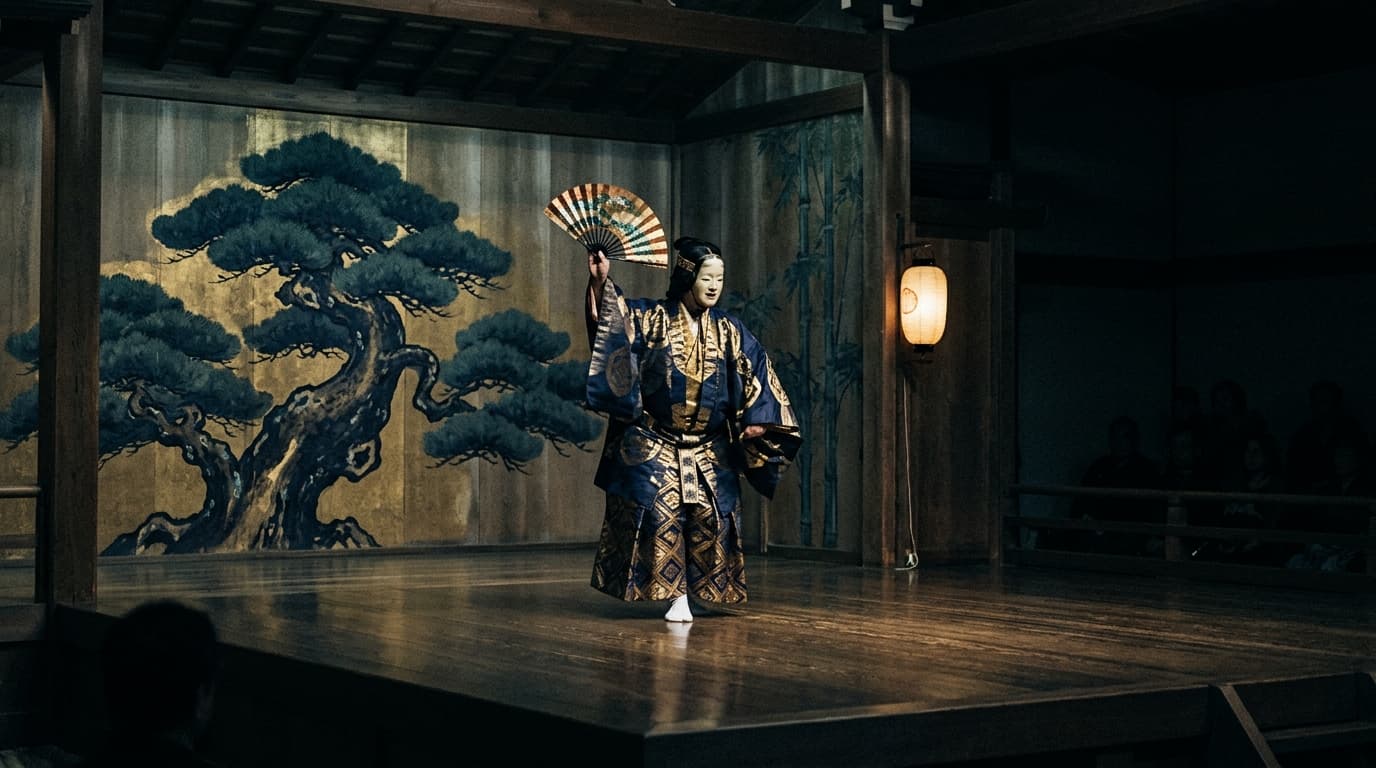
A Noh stage with a painted pine, a masked actor mid-gesture and a single fan, the audience in shadow.
Muromachi & Momoyama1336–1603 CEMasterMax日本語RomajiJLPT

The Noh Stage

能舞台Nō butai

Watch a masked performance and describe what the body did when the face could not.

The scene

The stage is bare: a pine tree painted on the back wall, a bridge for entrances, and nothing else to hide behind. Zeami is rehearsing a play he has revised too many times. He asks the traveller what they saw — and means the question literally.

What you will be able to do

  • Describe a performance and its effects
  • Talk about practice and intention
  • Use ながら to describe simultaneous action
  • Speak in a register suited to a master

Who you will be talking to

1 character
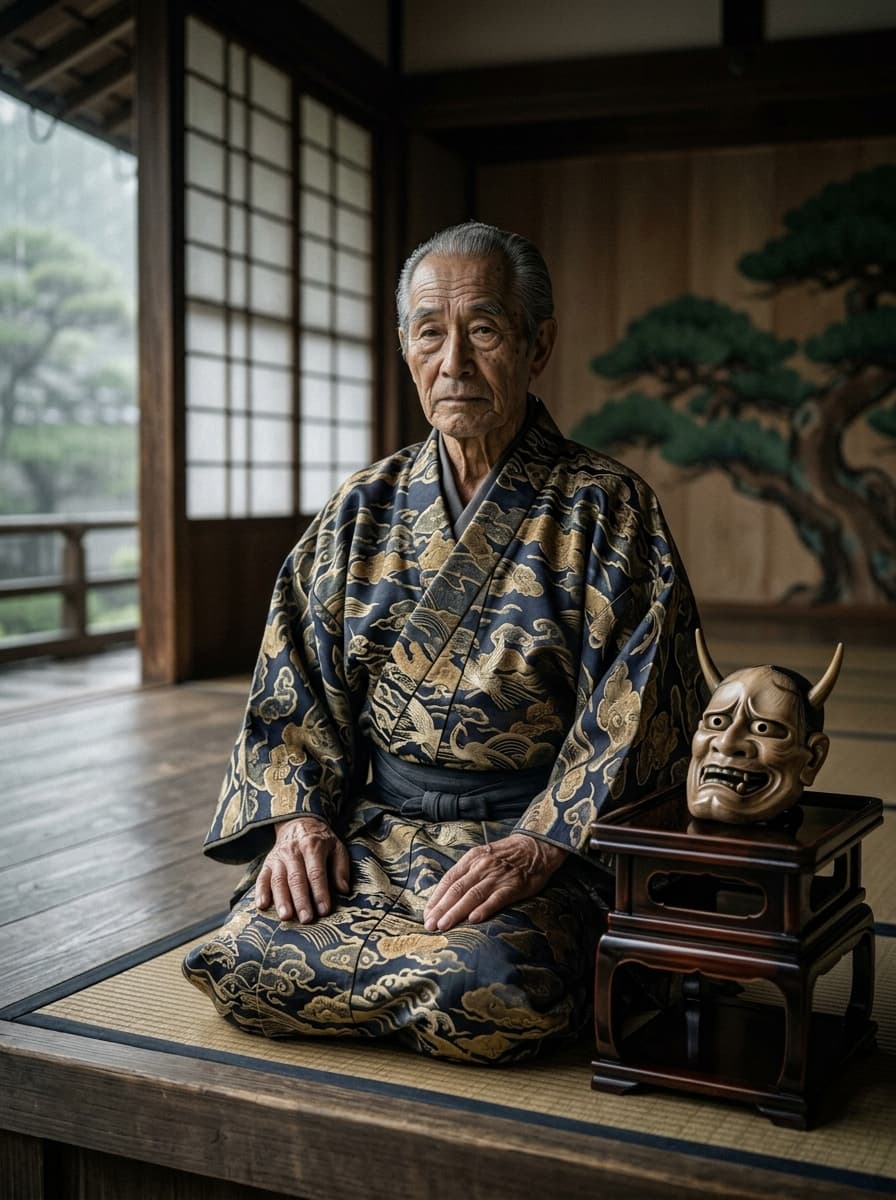
Portrait of Zeami in a Noh costume with a carved mask resting on a stand beside him.

世阿弥

Zeami

Noh actor and playwright · in his fifties

Zeami performed before the shogun as a boy and spent the rest of his life turning that craft into a theory. He writes about the mask, the voice, the interval between two steps. He is less interested in whether you enjoyed the performance than in what you actually saw.

measuredpoeticexactingunexpectedly playful

よく来た。今日の舞いは、どこが残った?

Yoku kita. Kyou no mai wa, doko ga nokotta?

You came. What remained with you from today's dance?

Words you will use

9 · Romaji and JLPT
  • 能
    nō
    Noh; the skill or ability to performnounN1

    The theatre is 能; the performer's art is also 能. The word carries both the form and the capacity to embody it.

  • 舞台
    butai
    stagenounN2
  • 謡
    utai
    Noh chantnounN1

    The sung text, delivered in a stylised register that is neither speech nor ordinary song.

  • 舞
    mai
    dance (in Noh)nounN1

    舞 is the patterned movement of Noh; 踊り is the everyday word for dance.

  • 面
    men
    masknounN2

    A carved Noh mask changes meaning with the angle of the head and the light. The actor does not emote through it; the mask does.

  • 演じる
    enjiru
    to perform; to play a roleverbN1

    演じます is polite. 能を演じる — to perform Noh.

  • 観客
    kankyaku
    audience; spectatornounN2
  • 稽古
    keiko
    practice; rehearsalnounN2

    稽古 is the disciplined practice of a traditional art, not a casual rehearsal.

  • 美しい
    utsukushii
    beautifuli-adjectiveN3

What is going on here

3 culture notes
HistorySurprising

The theorist of the mask

Zeami wrote the treatises that shaped Noh for six centuries. His central idea was that the actor should restrain emotion so the audience can complete it; the mask gives the face a stillness that the body must fill.

Language

Slow, break, fast

Jo-ha-kyū is the rhythm of a Noh play and of the day: a slow opening, a break or turn, and a rapid close. It governs the tempo of a single gesture as much as the shape of the whole performance.

Custom

The pine and the bridge

The painted pine at the back of a Noh stage is a constant image of the Yōgō pine at Kasuga Shrine, where the gods were said to descend. The hashigakari bridge is where the actor enters — and where the character first becomes visible.

The scripted path

1 authored dialogue

The Mask and the Mirror

Zeami has revised the same dance too many times. He asks what you actually saw — and then asks you to watch it again with your eyes closed.

17 turns · ~20 min

  1. Them

    よく来た。今日の舞いは、どこが残った?

    Yoku kita. Kyou no mai wa, doko ga nokotta?

    You came. What remained with you from today's dance?

  2. You

    静かなところが残りました。

    Shizuka na tokoro ga nokorimashita.

    The quiet part remained with me.

  3. Them

    静か、か。では、なぜ静かだった?

    Shizuka, ka. Dewa, naze shizuka datta?

    Quiet, was it. And why was it quiet?

  4. You

    動きを止めたからです。

    Ugoki o tometa kara desu.

    Because you stopped moving.

  5. 13 more turns, with grammar notes attached to the line where each one matters.