ChronoSpeak
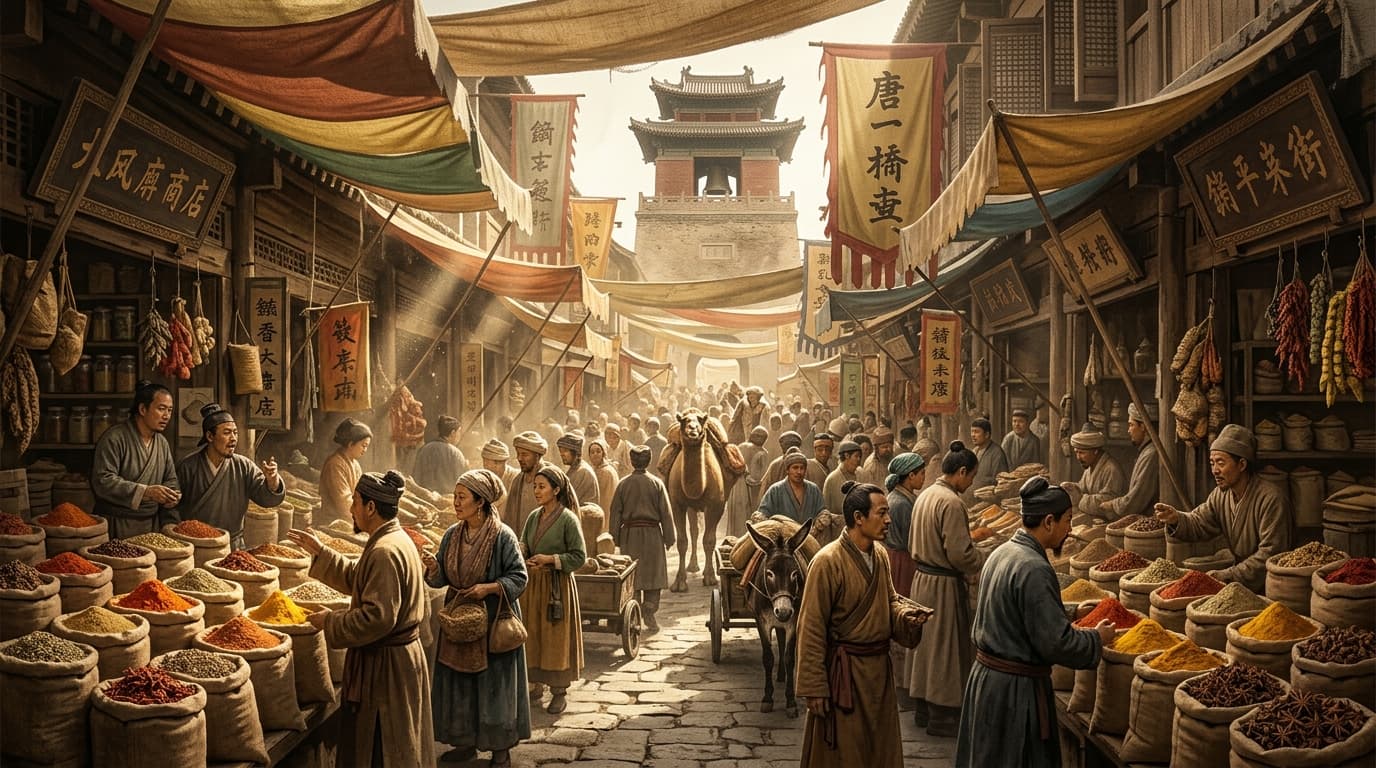
The West Market of Chang'an at noon, crowded lanes of spice stalls under cloth awnings with the bell tower behind.
Tang Dynasty618–907 CEBeginnerFree中文PinyinHSK 3.0

The West Market

西市Xī Shì

Haggle for saffron with a merchant who has heard every language on the Silk Road.

The scene

Noon drums have just sounded and the West Market's gates are open. Two hundred yards of stalls sell saffron, sandalwood and Song dynasty rumours — and the spice seller in front of you has been waiting for a customer who speaks her language badly.

What you will be able to do

  • Ask the price of something and understand the answer
  • Push back on a price politely, then settle on one
  • Name five goods you could buy in a Tang market

Who you will be talking to

1 character
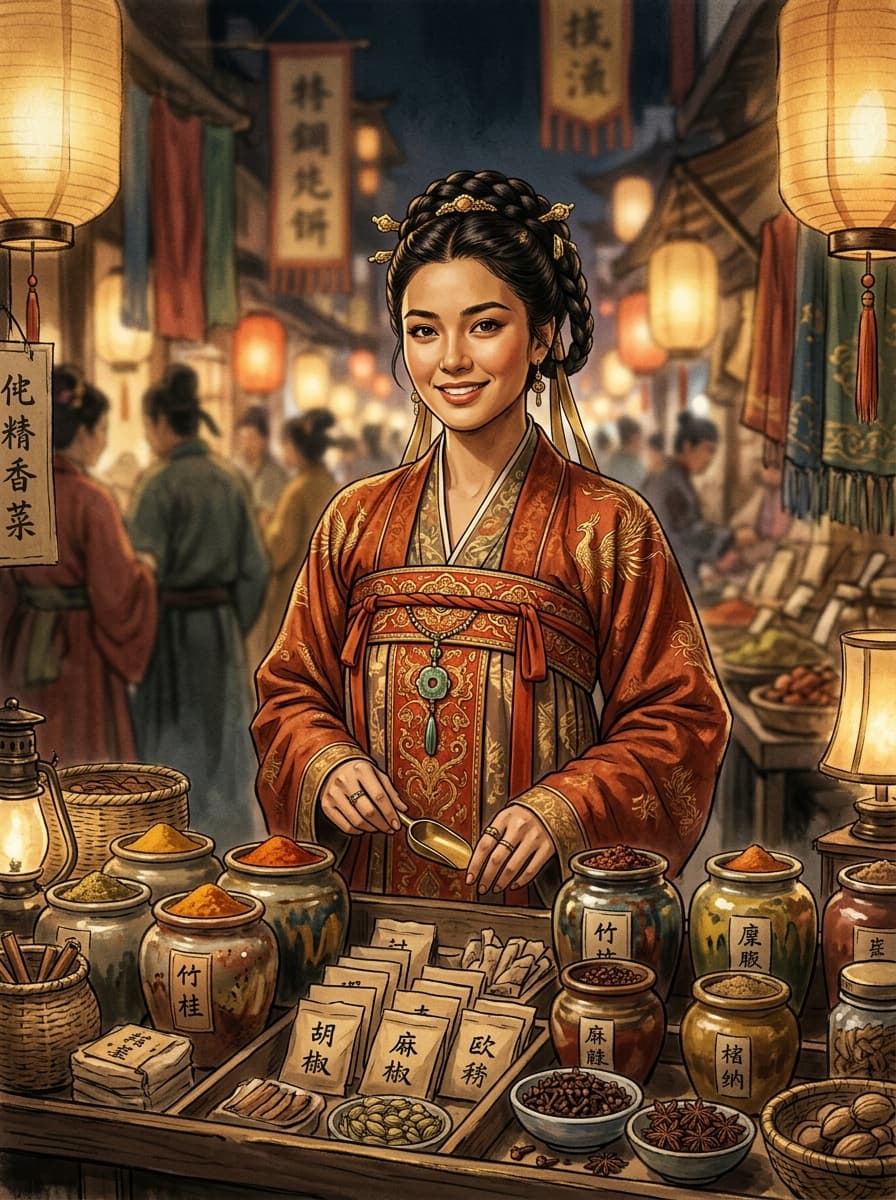
Portrait of Su Hexiang, a Tang dynasty spice merchant in a rust-red robe, standing behind a stall of jars and paper packets.

苏合香

Sū Héxiāng

Spice merchant of the West Market · late twenties

Third-generation keeper of a spice stall in Chang'an's West Market. Her Sogdian grandfather came east with a caravan and never went home again; her mother taught her to weigh saffron by feel. She prices in copper coins, accepts silk when coins are short, and has heard every language on the Silk Road spoken badly.

quick-wittedwarmshrewdcheerfully impatient

客官,来看看!这是刚从西域运来的香料。

Kèguān, lái kàn kan! Zhè shì gāng cóng Xīyù yùn lái de xiāngliào.

Honoured customer, come and look! This spice has just arrived from the Western Regions.

Words you will use

9 · Pinyin and HSK 3.0
  • 客官kè guān
    honoured customernounHSK 2

    Literally: guest + official

    How a shopkeeper addresses you. Using it back is a small joke she will enjoy.

  • 胡饼hú bǐng
    sesame flatbreadnounHSK 3

    Literally: foreign + cake

    Literally 'foreign cake' — baked on the inside wall of an oven, sold from street carts everywhere in Chang'an.

  • 香料xiāng liào
    spice; aromaticsnounHSK 3
  • 多少钱?duō shao qián?
    How much is it?phraseHSK 1

    Literally: how much + money

    The single most useful sentence in this scene. Learn it first.

  • 太贵了。tài guì le.
    That's too expensive.phraseHSK 2

    The opening move of any haggle. Say it warmly — 太贵了 delivered flatly ends the conversation.

  • 便宜pián yi
    cheap; inexpensiveadjectiveHSK 2
  • 铜钱tóng qián
    copper coinnounHSK 4

    Literally: copper + money

    Coins were strung in hundreds through a square hole. Bolts of silk served as large-denomination currency.

  • 胡椒hú jiāo
    black peppernounHSK 3

    Literally: foreign + pepper

    Another 胡 word. Pepper reached China along the Silk Road and was worth more by weight than silver in some eras.

  • 西域Xī yù
    the Western Regionsproper nounHSK 4

    Literally: western + territories

    Everything beyond the Jade Gate: today's Xinjiang, Central Asia, and by extension Persia and India.

What is going on here

4 culture notes
Trade

Two markets, one of them foreign

Chang'an had exactly two markets, both walled. The East Market served the bureaucracy; the West Market served the world. Its lanes were organised by trade, and roughly 40,000 foreign merchants worked inside it.

Daily lifeSurprising

The drum opens, the bell closes

Under the 坊市制 ward system, the market opened at noon when a drum sounded from the bell tower, and closed at dusk when the bell rang. After that, staying on the street was an offence — the city locked itself up every night.

LanguageSurprising

Why 'foreign' is in the word for carrot

胡 hú was the prefix Tang China glued onto anything that arrived from the west: 胡饼 sesame bread, 胡椒 pepper, 胡萝卜 carrot, 胡琴 the two-stringed fiddle. The vocabulary itself records what the Silk Road carried.

Trade

Silk you could spend

Copper coins were heavy and awkward for large sums, so bolts of silk circulated as currency. Tax could be paid in silk. When Su Hexiang offers to take silk instead of coins, she is not being quaint — she is being practical.

The scripted path

1 authored dialogue

Your First Haggle

Buy pepper from Su Hexiang without paying her opening price — and learn the two sentences that make it possible.

10 turns · ~12 min

  1. Them

    客官,来看看!这是刚从西域运来的香料。

    Kèguān, lái kàn kan! Zhè shì gāng cóng Xīyù yùn lái de xiāngliào.

    Honoured customer, come and look! This spice has just arrived from the Western Regions.

  2. You

    你好。这是什么?

    Nǐ hǎo. Zhè shì shénme?

    Hello. What is this?

  3. Them

    这是胡椒,从西域来的。很香。

    Zhè shì hújiāo, cóng Xīyù lái de. Hěn xiāng.

    This is pepper, come from the Western Regions. Very fragrant.

  4. You

    多少钱?

    Duō shao qián?

    How much is it?

  5. 6 more turns, with grammar notes attached to the line where each one matters.